Edvest 529 Talks Dairy Science Education & Career Pathways with Northeast WI Technical College
By Chelsea Wunnicke, Wisconsin Department of Financial Institutions, WI 529 College Savings Program
published May 28, 2026
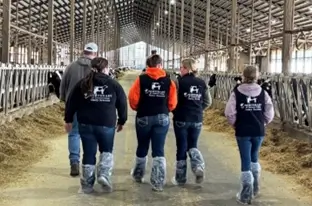
Students at Northeast WI Technical College's Dairy Science Management Program learn through classroom, laboratory, and on-farm experiences.
Wisconsin's dairy industry generates $52.8 billion in annual economic impact and supports more than 120,000 jobs1. With that level of activity, it is no wonder that educational institutions seek to fill the demand for skilled workers to keep the industry at top production. Students considering post-secondary education in dairy science have many options to learn valuable skills that can apply to any stage of dairy production or manufacturing.
In recognition of June Dairy Month, Wisconsin's 529 College Savings Program connected with Northeast Wisconsin Technical College (NWTC) to highlight how post-secondary education is preparing students for success in the state's evolving dairy industry. Dr. Wendy Vandenboom, Veterinarian and Dairy Science Instructor at NWTC, shared insights on student pathways and workforce opportunities in this vital sector.
Post-Secondary Education Options for Every Type of Student
NWTC's Dairy Science Management Program is one of the only dairy-specific technical college programs in the country. According to program instructor, Wendy Vandenboom, DVM, students can pursue either a one-year technical diploma in Dairy Science, or a two-year associate degree in Dairy Science Management. Vandenboom has been with the program since it began about ten years ago, when dairy employers in the region approached NWTC with a need for a more skilled and trained workforce. She brings her experience as a veterinarian, working with industry, and passion for inspiring the next generation, into the classrooms, labs, and on-farm experiences that make the program a unique learning experience for students. While many students seek employment directly after completing the technical college program, others choose to continue their education, bringing their valuable transfer credits to 4-year degree programs.
Vandenboom explains that thinking of a "stereotypical" Dairy Science student or career may be based on outdated notions. "Some of my students are fresh out of high school and have never been on a dairy farm," she said. "Others are in their 40s and pursuing a second career. Our students come from rural, urban, and suburban communities across the state of Wisconsin and beyond." She also emphasized the diversity within the program, noting that a majority of students in the program are female, and that success in in agriculture is not defined by gender or physical traits. Internships with supportive partners are key to providing real-world experiences to grow knowledge into marketable expertise.
Wisconsin Dairy: A Strong Job Market with Varied Needs
The NWTC program positions students to become herd managers on farms, support their own family farms, or fill positions in milk testing and recordkeeping, milking unit supply, and artificial insemination. Others have pursued paths like marketing or agricultural education, depending on their interests. Vandenboom says her students enter jobs that often have high wages, benefits, and human comforts sometimes not associated with farming in the "old days".
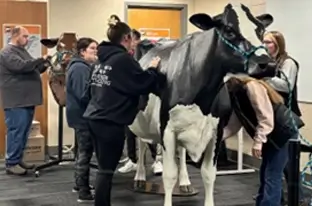
Students at Northeast WI Technical College's Dairy Science Management Program learn hands-on skills that make them valuable recruits for the Wisconsin dairy industry.
She also emphasized that a wide variety of skill sets are needed across the industry, and that students with interests in human resources, data management, and technology are valuable to agricultural employers. In preparing for graduation, many students are in the enviable position of having multiple job offers. "All of my former students are employed," says Vandenboom. At the same time, the instructor predicts that the strong job market in agricultural careers will continue, and that training will broaden to include more coursework in robotics and automation as farming becomes increasingly technical and specialized.
Preparing Wisconsin's Youth for Careers in Dairy & Agriculture
Students pursuing agricultural programs are increasingly coming from non-farming backgrounds, often discovering their interest through extended family connections, extracurricular activities, or high school coursework. This shift highlights the importance of early exposure to agricultural careers through farm visits, manufacturing plant tours, and on-campus programs. High school students can also get a head-start in the industry by earning college credits through dual enrollment with technical colleges or universities.
Even before entering post-secondary education, families and communities can help youth see a future in agricultural and dairy industry careers. Families can encourage their students to work hard in school, engage in agriculture-focused extracurricular activities, and perhaps most importantly, set aside dedicated funds for their children's post-secondary education and career training, which is where the state's 529 College Savings Program comes in.
Saving with Wisconsin's Edvest 529 College Savings Plan provides families a triple tax-advantaged way to save and pay for future education expenses. Contributions to an Edvest 529 account are made with after-tax dollars, but account earnings are free from federal and state taxes when used to pay for qualified higher education expenses. Plus, Wisconsin taxpayers saving with an Edvest 529 account may also qualify for a 2026 state income tax deduction, up to $5280 per beneficiary, for single filers or married couples filing jointly.
Funds saved in an Edvest 529 account can be used at accredited technical colleges and community colleges, like Northeast Wisconsin Technical College, toward apprenticeship programs registered and certified with the Secretary of Labor, and at four-year public and private colleges. Families can use their savings to pay for tuition, certain housing and food expenses, fees, books, equipment, and more.
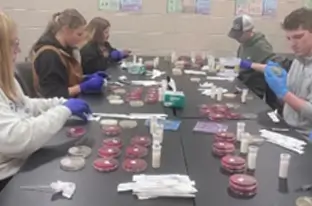
Students at Northeast WI Technical College's Dairy Science Management Program learn through classroom, laboratory, and on-farm experiences.
"The Wisconsin dairy industry needs people with all types of skills," says Chelsea Wunnicke, College Investment Program Finance Officer for the Wisconsin Department of Financial Institutions, administrator of the Edvest 529 College Savings Plan. "We want families to understand that when saving for a child's future education with Edvest 529, you are preparing your student to enter the workforce at a higher level, and with specific skills that are in demand. Technical colleges and industry-specific training programs are very much part of the landscape of post-secondary education."
Edvest 529 accounts can be opened by parents, grandparents, or almost anyone who wants to encourage a child to pursue education or training after high school. And it's about more than just the money – when a student knows they have funds set aside for their future education, regardless of the amount, they are more likely to envision the post-secondary options available to them, and potentially graduate with less debt.
The Wisconsin 529 College Savings Program is celebrating National Dairy Month by thanking Wisconsin's farmers, dairy manufacturers, and the educational institutions who are dedicated to keeping the dairy industry growing and strong. Young people in Wisconsin have many opportunities to develop their interests into a career in agriculture through post-secondary education. Wisconsin families and communities can encourage youth's interest in agricultural careers by increasing their exposure to the many opportunities in this industry, showing them that there are post-secondary options that fit their interests, and by saving for their future education.
About Edvest 529
For more than 25 years, Edvest 529 – Wisconsin's direct-sold 529 college savings plan – has been helping families save for education expenses. Account owners can choose from 25 investment portfolios, access easy-to-use savings tools, and take advantage of unique tax benefits, including a 2026 state income tax deduction on contributions made to an Edvest 529 account for Wisconsin taxpayers, up to $5,280 per beneficiary for single filers or married couples filing jointly, or up to $2,640 for married couples filing separately.
Edvest 529 offers families a flexible and convenient way to save for a broad range of qualified education expenses, including college tuition, technical and trade schools, certified apprenticeships, recognized credentialing programs, K–12 expenses, and student loan repayment.2 Accounts can be opened online in about 10 minutes, making it easy for families to take the first step toward their education savings goals.
Edvest 529 has no sales charges, enrollment fees, or annual account maintenance fees. In fact, Edvest 529 is among the top 5% lowest-cost 529 college savings plans in the nation.3
Want more details?
For additional information on Edvest 529, including investment options, fees, and frequently asked questions, visit Edvest.com, or follow Edvest 529 on Facebook, Instagram and YouTube.
Watch our video "What is the best option for college savings"—part of the College Savings Connection series—to learn more about how a 529 plan works and how it can benefit your family.

About Chelsea:

Chelsea Wunnicke serves as a Wisconsin College Savings Program Finance Officer with the Wisconsin Department of Financial Institutions. With a background in delivering Financial Capabilities Outreach and Education, Chelsea has a special interest in helping more Wisconsin communities and youth benefit from early saving for higher education. She lives with her family in rural Richland County, Wisconsin.
####
To learn more about Wisconsin's Edvest 529 College Savings Plan, its investment objectives, risks, charges and expenses, see the Plan Description at Edvest.com before investing. Read it carefully. Investments in the Plan are neither insured nor guaranteed and there is the risk of investment loss. Consult your legal or tax professional for tax advice. If the funds aren't used for qualified higher education expenses, a federal 10% penalty tax on earnings (as well as federal and state income taxes) may apply. Check with your home state to learn if it offers tax or other benefits such as financial aid, scholarship funds, or protection from creditors for investing in its own 529 plan. TIAA-CREF Individual & Institutional Services, LLC, Member FINRA, is the distributor and underwriter for Wisconsin's Edvest 529 College Savings Plan.
Footnotes
- 1Source: Farm Management Division of Extension, University of Wisconsin-Madison, 2022↩
- 2K-12 (primary or secondary school) withdrawals are limited to $20,000 per year for K-12 qualified expenses. Apprenticeship programs must be registered and certified with the Secretary of Labor under the National Apprenticeship Act. Student loan repayment subject to a lifetime limit of $10,000 per individual when using a 529 plan. Withdrawals for Recognized Postsecondary Credentialing Programs—including tuition, books, equipment, supplies for the enrollment or attendance, testing fees if required to obtain or maintain a Recognized Postsecondary Credential, fees for continuing education if required to maintain an RP Credential and therapies for students with disabilities—are exempt from federal and Wisconsin income tax. If you are not a Wisconsin taxpayer, these withdrawals may include recapture of tax deduction, state income tax as well as penalties. Consult a tax professional for guidance.↩
- 3Source: ISS Market Intelligence 529 College Savings Fee Analysis 1Q 2026. Edvest 529's average annual asset-based fees are 0.14% for all portfolios compared to 0.47% for all 529 plans, 0.83% for advisor-sold plans, and 0.32% for direct-sold plans.↩
Neither TIAA-CREF Tuition Financing, Inc., nor its affiliates, are responsible for the content found on any external website links contained herein.
5471247
More to explore
-
Explore our plan
Learn more about eligibility and all the qualifying expenses an Edvest 529 account can cover.
How our 529 works -
Compare investment portfolios
We make it easy to choose investment portfolios that fit your financial needs and savings goals.
Discover your options -
Ready to get started?
Open an Account
